

Python Developers for Building AI, Automation, and Backend Solutions
Python engineers from our own network for automation, AI agents and backends, hired for one stage and brought back for the next.




We found 37 available Python Developers
Hire Python engineers stage by stage, from our own network
More of the Python work clients bring to Cortance is process automation and AI agents, and neither usually has a fixed scope on day one. You automate one process, see what it changes, and only then know which process should come next.
Why automation work needs a different way to hire
That stage-by-stage rhythm is hard to staff the usual way. A full-time hire has little to do between stages, and an agency asks you to price the whole scope before the first stage has shown what the second should be. What fits better is a Python engineer you bring in for one stage, pause once that process runs on its own, and bring back when the next one is ready.
Flexible Python hiring from our own network
This is how we work. You hire a Python developer from our network on a flexible basis, stop when a stage is done, and come back when you have the next one. Every engineer we present is part of our own network, not a developer resold from another company, so you can ask for the same person again. If they are available, they return already knowing your systems and the processes they automated last time.
Because automation increasingly ends with an AI step, a model that classifies a request, drafts a reply or decides where a record goes, we give preference to Python engineers who are actively developing in GenAI. Of the 50 Python profiles we reviewed in September 2026, 14 list LLM tools such as LangChain, OpenAI or LangGraph.
Engineers from our network who work this way
Terence J., a senior engineer in our network, started with one job for an e-commerce company. In a month, he built workflows that list its products on Amazon, eBay, Allegro, Shopify and other marketplaces, and ship orders through carriers such as UPS, DHL and FedEx. The client has kept coming back to him since, adding one marketplace or carrier at a time.
Agent projects grow the same way. Oleh Sh. built a lead-handling agent for a sales team. It scores each lead and suggests where it should go, but waits for an operator's approval before anything changes, so the team can let it act on its own in a later stage, once the results justify it.
Some stages end with a decision about the model, not the code. Ivan S., a backend engineer in our network, built an estimation system for a service company. A client describes a project in plain language, and within minutes the system breaks it into tasks with effort and cost estimates. He fine-tuned a small Phi model on the company's own historical data and ran it entirely on the client's infrastructure, so no project data went to an outside provider. Every new model version was scored against an evaluation dataset before rollout, which lets the team plan the next stage without guessing whether the last one still holds.
So start small. Send us the first process you want to automate or the agent you want to ship, and tell us whether you expect more stages after it. We plan the engagement around that, and the engineer you choose can start within 2 days.
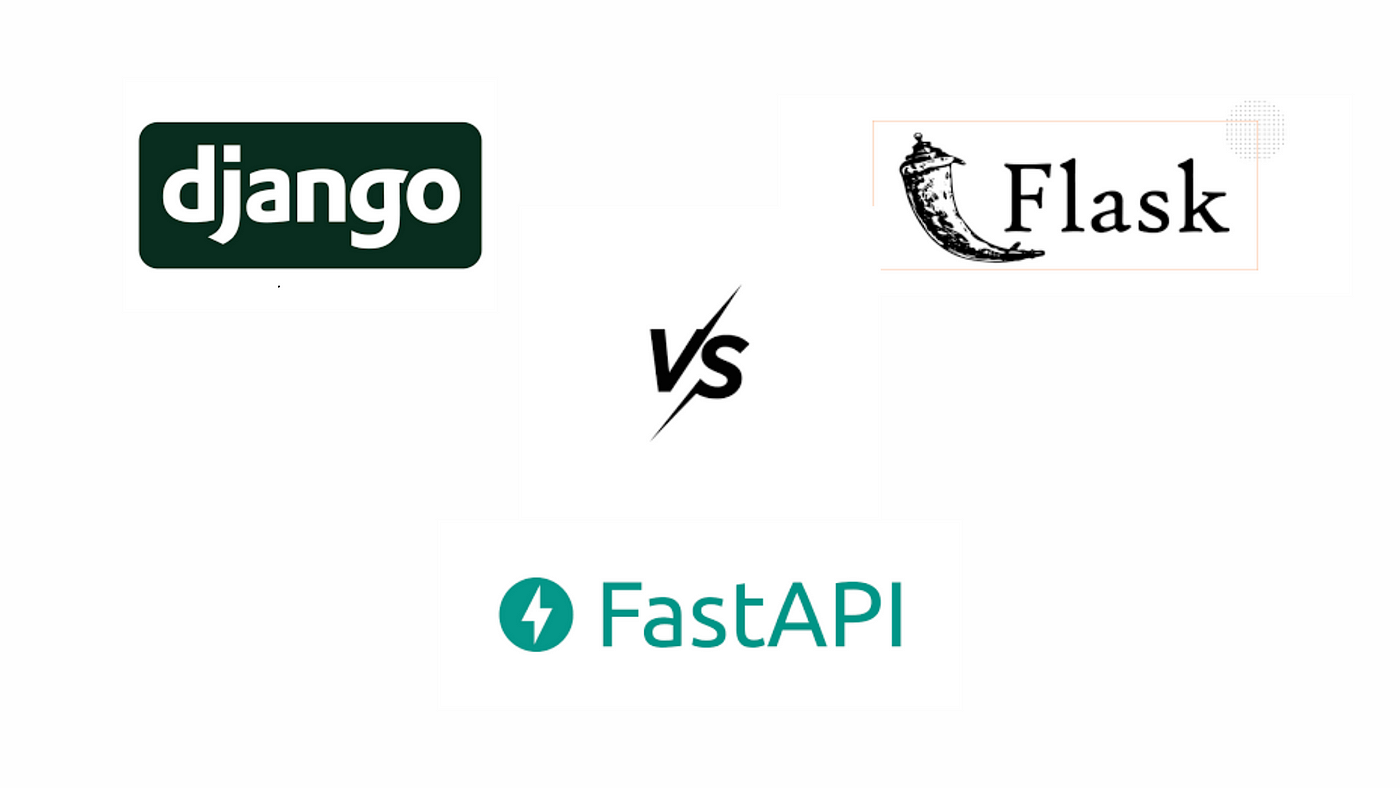
Django, FastAPI or Flask?
Choose Django when the product needs user accounts, an admin, an ORM and a conventional structure from the first week: it is the shortest route to a maintainable web application. Choose FastAPI when you are building an API-first service, need async I/O, or want request validation and interactive API documentation generated from type hints. Choose Flask for small services and prototypes where you want to assemble your own components and accept that you will add structure as it grows.
As of September 2026, 25 engineers in our network list FastAPI, 21 list Django and 6 list Flask, so FastAPI and Django are the quicker stacks to staff. Some engineers work in more than one. If you are starting fresh, ask the developer we match you with to defend their pick for your case, which tells you more than any framework quiz.
Working with a remote Python developer: what to agree in week one
A remote Python engineer gets productive fastest when the environment is reproducible. Agree on four things before the first pull request:
- Runtime and dependencies: the Python version and a locked dependency file, whether Poetry, uv or pip-tools, so every machine and every CI run builds the same environment;
- Typing and linting: whether type hints are required and which checker and formatter run in CI, so review time goes on design and not on style;
- Tests and data: how the suite runs locally, and how the developer gets realistic data without touching production;
- Overlap hours: a fixed window for questions, and a rule for what can wait for the written update.
For data and machine learning work, add one more: where notebooks end and production code begins. Put the answers in your brief, and the developer we match you with can start on day one, not day three.
What our Python developers built
Six engineers from our network, each linked to the full profile.
FastAPI and Django backends
Built the server side of Abogii, a Spanish-language legal chatbot on OpenAI with an admin panel for managing the PDF regulations it answers from, in FastAPI. Also built the Qikbook booking backend with Django REST Framework, Celery and Redis.
Data pipelines
Senior Data Engineer. Built ETL and ELT pipelines on AWS Glue and PySpark and a Delta Lake data lake on S3 for Bridgewise, an AI stock-research platform, and earlier led an OCR invoice-processing team on Django.
Machine learning
Data Science Tech Lead. Led a team in the Autonomous Greenhouse Challenge run by Wageningen University: a reinforcement learning model for climate control plus a computer vision module. The team reached the finals and placed 4th in the second round.
Django for finance
Six years of Django on his profile. Built a bank budget management system that ties app events, express credit and installments to Google, Apple Search and Facebook Ads APIs, and an online platform for insurance payment claims.
Python on AWS for production
Built production statistics dashboards, a success-rate ranking for print lines and invoice reporting for Myze by Brother, a print-on-demand platform, on a Python backend with AWS Lambda, EventBridge and SQS. At Elife Limo he made ride search 200% faster.
NLP for biomedical research
Senior data scientist. Built named entity recognition and relation extraction models with BERT, spaCy and TensorFlow for Smartomica, which turns PubMed papers into a searchable knowledge base of genes, proteins, diseases and compounds.
Python agents, spreadsheet automation and live Django upgrades: what to check before you hire
Three kinds of Python work need a different engineer than the job title suggests: agents built on language models, scripts that replace a team's spreadsheets, and upgrades to Django products that must stay online. Each fails in its own way when the wrong person is hired. Below are the criteria we match on for each, with work our engineers have delivered.
Python AI agents: what decides whether they are safe to run unattended?
The fallback path decides it: what the agent does when the model is unsure, and who checks the output before it reaches a customer. Frameworks such as LangChain, LangGraph, CrewAI and LlamaIndex make a working demo quick to build, and all four appear on our Python engineers' profiles and project histories. The demo hides two failure modes. A model that returns free text where the next function expects a field breaks the pipeline quietly, and an agent that acts on a low-confidence answer does damage nobody reviewed.
Oleh Sh., a senior Python and TypeScript AI engineer on our team, built a moderation pipeline for a consumer content platform in which the model scores each post by category and severity, low-confidence results go to a human review queue instead of automatic action, and the false positive rate is tracked per category every week. Ruslan B., a data science engineer, worked on agents that act: an R&D system that turns a tester's plain-language instruction into mouse and keyboard actions on a web page. When a brief mentions agents, we match on engineers whose past projects show structured outputs, review queues and measured error rates, not on the framework name alone.
Which spreadsheet workflows are worth moving to Python first?
Start with the reports someone rebuilds by hand every week and then sends for sign-off: they repeat most often, so automating them pays back first. Emmanuel O., a Python and Django engineer on our team, did this inside a bank's cybersecurity unit. He replaced the Excel sheets used to track reports and approvals with a Django reporting and approval system, and used Pandas to automate about 95% of a data clean-up task for removing users from the bank's databases.
The common mistake is to copy the spreadsheet as it is. A sheet usually carries unwritten rules, such as which column a manager checks before signing, and a script that skips them produces clean-looking numbers nobody trusts. An engineer who has done this before starts by mapping who edits the file, who approves it and what happens when a value is missing, and keeps a record of each approval. Tell us in the brief who owns the file and who signs it off, and we will match on engineers whose projects include reporting and approval automation, not generic scripting.
Can a Python developer upgrade a live Django product without downtime?
Yes, if they have done it on a product with paying customers before, which is a different skill from building a Django app from scratch. Waleed A., a senior Django engineer based in Germany, worked on a point-of-sale, booking and marketing SaaS used by more than 50,000 small and medium businesses across Europe. His work included moving every customer from one subscription billing tool to another, from Billwerk to Chargebee, linking the POS and booking products, keeping the system close to full uptime, and leading the rollout of AI coding tools across the engineering teams.
Two common issues in this type of work are: a schema migration that locks a busy table during business hours, and a billing switch that either charges a customer twice or fails to charge at all during the cut-over. AI coding tools accelerate routine tasks like writing the migration and tests, but the cut-over plan still requires someone experienced in executing it. For a live product, we review the engineer's history for maintenance and migration experience, not just new development. Say in the brief whether the product can take a maintenance window.
Pair Your Python Developers
With Related Experts
Most Python projects require additional expertise. Whether you need front-end devs, DevOps specialists, or database architects, we connect you with professionals who integrate with your Python team.


Answers for Common Python Hiring Questions
Can’t find what you are looking for?
What are the challenges of using Python in large-scale enterprise applications?
Python vs Go: which is better for backend services?
Can I hire a Python developer part-time?
What is the difference between a Python developer, a data engineer and a data scientist?
Can Python developers build AI and LLM features?
How fast can I see Python candidates?
How much does it cost to hire a Python developer?
Find your Python developer
within days, not months
Share your Python position requirements
Receive a personal proposal with verified Python talents
Onboard qualified Python devs to your team in days, not weeks
Discover Our Services
Explore our technical capabilities and find the right tech stack for your needs.