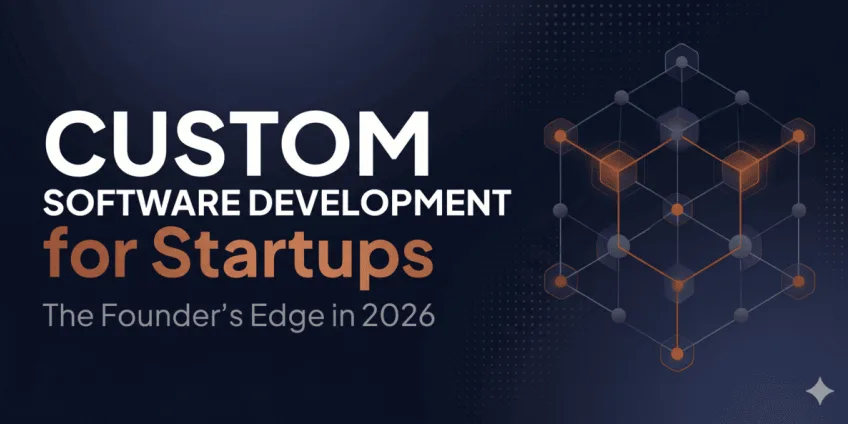
Custom Software Development for Startups: The Founder’s Edge in 2026
Digital TransformationPublished on by Yevhen Vavrykiv • 8 min. read read
- Introduction
- Why Startups Struggle with Off-the-Shelf Software
- Truth: Custom Software as an Enabler, Not Just a Cost
- The Cost of Inadequate Planning and Ad-Hoc Workflows
- How To Workflow-Engineer for Growth at Early Stages
- Startup Custom Software and AI in 2026: What Changes?
- 1. AI-Infused Products Become the Norm
- 2. Automation Moves Up the Stack
- 3. Infrastructure Complexity Rises - But So Does Resilience
- Talent and Workflow: Why Vetting Canyon Is Now Part of Survival
- Coding for Craft: Scalability Without Compromise
- The Hidden Traps for Startup Founders
- Real Evidence: Successes from Vetted Bespoke Teams
- Choosing Implementation - and the Partner - for Your Custom Software Lifecycle
- FAQ
- Conclusion
Introduction
Generic tools hit their limits fast. For the founder moving at pace, a productivity deadlock usually surfaces once outgrowing templated platforms. Sudden scale brings fresh needs - product variability, seamless integrations, granular controls - without a ready-made answer found on a pricing table. In this phase, custom software development creates critical breathing room for innovation and saves executive teams from the recurring headache of duct-taping systems together to meet new targets.
Custom solutions deliver exact-fit utility instead of cumbersome workarounds. Unlike cookie-cutter applications, they can address the specifics of your workflows and tactical vision. The upfront commitment may feel risky when margins are slim, but the payoff - streamlined operations, real-time agility, ownership over user experience - compounds quickly. As succinctly as possible: “Custom software enables startups to build solutions aligned with precise business needs, evolve in line with strategy, and accelerate growth where packaged products cannot.”
It's hardly the easy option, but the outcomes for business-focused leaders are concrete - more agility, smoother scale, and the foundation to layer innovation methods like AI-powered automation on a system you actually control. As AI disrupts old assumptions and technical talent markets contort further, the deliberate path becomes clearer: owning your own tools controls your destiny
.
Why Startups Struggle with Off-the-Shelf Software
Founders choose ready-made tools to start, for reasons that hardly need restatement - cost, speed, and a low-risk stepping-stone to usable features. Yet, as complexity grows, standard solutions entail heavier costs elsewhere: rigidity, gaps in integration, and feature limitations that become obstacles rather than assets.
A recent Gartner survey found that 62% of VC-backed startups had replatformed at least one critical workflow within their first three years due to scaling incompatibilities. Off-the-shelf software frequently fails because it cannot:
- Mirror unique product or customer workflows;
- Accommodate pivots in fast-moving industries;
- Support mature integration, security, and compliance requirements without deep customization - and corresponding expense;
- Offer intellectual property control, raising risk around scalability and M&A activity;
Early momentum faces drag once these barriers appear. Frustration mounts as gaps in feature-fit require awkward extensions, often involving clunky third-party connectors or manual work. Internal teams wind up supporting a maze rather than focusing on release velocity for core offerings.
Truth: Custom Software as an Enabler, Not Just a Cost
Startups intent on long-term differentiation increasingly see custom app development not as an extravagance but as basic enablement. Specific pains surface in interviews across SaaS and fintech: unsupported data processes, a lack of workflow automation, or pains integrating evolving AI models where product direction outgrows the platform. Founders pressing through these sticking points observe stark differences after migrating:
- Release cadences jump as friction lowers;
- Data becomes more actionable with direct schema alignment;
- Scale and security are intentionally engineered, reducing retrofitting burden;
According to the research, startups adopting custom flows achieve meaningful KPIs nearly twice as fast post-launch than those encumbered by platform limitations. The case is practical and urgent: custom development creates leverage, confers uniqueness, automates context-aware tasks, and future-proofs business operations.
Worth highlighting - a robust custom software foundation becomes far more defensible as emerging AI platforms, composable infrastructure, and continuous integration push prominent vendors into lockstep but leave founder-led upstarts room to move, upgrade, and differentiate.
The Cost of Inadequate Planning and Ad-Hoc Workflows
Spontaneous sprints and stop-gap automations provoke false comfort when shipping fast is paramount. Over-reliance on improvisation breeds risks mode-locked team routines, rapid accumulation of technical debt, and low visibility into business-critical handoffs - outcomes as damaging as poor initial product fit.
Wind back the clock for many scaling startups and the same pattern repeats: past three months, workflow “heroes” cement vital automation that only they understand, meanwhile error rates rise. Gartner’s CIO report summarizes this with less art: over 70% of scaling issues leaders report involve uneven workflow maturity, slow feature deployments, or inconsistency between team-originated process hacks.
Custom solutioning requires intentional workflows - not massive process overhead, but codified QA, observable sprint health, and conviction on quality versus delivery. The difference between controlled and chaotic trajectories lies in the systemisation now recognised as the minimum operating DNA for venture-backed companies.
How To Workflow-Engineer for Growth at Early Stages
Getting the sequence right from pre-seed to scale-up is substantially about understanding where to infuse custom workflows for maximum ROI, not automating everything at once. Based on workflow case reviews, effective startup leaders approach bespoke engineering like this:
- Define explicit objectives, attaching quantifiable outputs to each functional area;
- Introduce minimum-required release and incident documentation processes - the overhead remains low, but pattern consistency establishes resilience and supports DevSecOps early;
- Map nonfunctional priorities: data access, regulator requests, and information silos - especially important for healthtech, fintech, or enterprise-SaaS adjacent domains;
- Design for iterative, incremental evolution - microservice architecture, API-observability from the outset, and modular features unplug future tech (like LLM upgrades) from upending the core;
Outsource tactical gaps, but retain sharp visibility by holding frequent workflow assessments, course-correcting standards, and pushing for a minimally disruptive foundation. Rely less on one hero innovator who carries technical history in undocumented code, and more on systemic patterns that distribute risk and accelerate collective pace.
Startup Custom Software and AI in 2026: What Changes?
Three pronounced trends will define the next wave of startup success. Each theme reshapes both what custom development involves and where workflows value lands:
1. AI-Infused Products Become the Norm
By 2026, we estimate that over half of successful startups embed AI layers not as overt, discrete tools, but woven throughout products - the so-called "invisible" engine. Generative features amplify personalization, automate repetitive logic, and introduce closed feedback loops between users and systems.
Custom foundations provide the context - teams can experiment with rapid LLM feature deployment or bespoke machine learning tasks unmatched by competitor offerings once the operational data backbone is owned, not rented.
2. Automation Moves Up the Stack
No-code leaks benefit at the basic support tier. Savvy teams shift ambition higher: embedding workflow engines, deploying AI reasoners for ticket management, or porting traditional business logic into process mining environments. Owning code means integrating new automation holistically - in Frictionless analytical processes, change log management, and continuous compliance become standard realities, not add-ons.
3. Infrastructure Complexity Rises - But So Does Resilience
Technology ecosystems in 2026 are more multi-layered. Talent must navigate public cloud scaling, edge workloads, and highly distributed user sensors - but without surrendering visibility or cracks in security infrastructure.
Teams with control over custom kernels strengthen core code ownership. Combined with SLA-safe DevOps and rigorous vetting, misconfiguration risks and compliance burdens dramatically drop, compared to scripted “extension” approaches where full system visibility is lacking.
Talent and Workflow: Why Vetting Canyon Is Now Part of Survival
Hiring external development partners based on resumes or agency track records routinely masks variance in abilities, especially where custom integrations or nontrivial security practices are needed.
Between Instinct and science is where systematized vetting makes the measurable difference:
- Regular shortlisting under 30 minutes avoids recurring delays languishing in résumé mining, while documented engineering sprints keep every major increment transparent to owners.
- Of over 2,800 applicants registered, Cortance maintains just 592 as active, verified engineering talent (April 2026). Teams gain stability owning quality.
Choosing partners with rigorous qualification practices is non-negotiable for scaling. Data-driven KYC, standardized live engineering screens, and five-layer assessment routines mean workflow technology scale is finally competitive, repeatable, and compliant - all space founders dislike surrendering as they mature toward equity events or large-scale rollouts. Light bureaucracy is tolerable; hidden skills gaps or process drift kill speed.
Want an extra note? Of all engineering staff placed via time-tested platforms using these protocols, 89% remain in productive engagements beyond transformation, lowering churn and root-cause disruption across iterative product cycles.
If there’s a through-line to workflow success, it’s that procedures for vetting - like those championed in networked staffing marketplaces - protect both schedule and shareholder value. For startups, where single-point-of-failure risk is fatal, mature outbound systems shouldn’t be an afterthought. Instead, standardized, evidence-rich selection acts as insurance against the hidden costs of hurried hiring and opaque third-party engagements.
Coding for Craft: Scalability Without Compromise
A startup roadmap isn’t about building everything at once, it’s embarking with a sharp focus yet inflecting key technical decisions for outsized returns. Strong custom solutions start minimal, then branch carefully around patterns of evolving demand.
Crucially, investing early in API-first systems or microservice-friendly modules locks in life-long adaptability - especially as priorities change. Integrated test automation improves regression reliability, flattening the sorts of surprise bugs that slow releases and elevate operational expenses down the road. Standard effort spent here is smaller than downstream pains cured.
Resistance often comes from capacity fears ("too expensive; too slow"), but shifting from big-bang delivery toward iterative, CICD-enabled deployments solves the core time/pricing bottleneck. When high-skill teams shoulder back-end refactor work or rapidly overlay new front-end modules (“LLMs now required immutable audit logs”), the shortcut approach becomes quickly obsolete. Custom code shouldn’t slow your path - it fuels deliberate differentiation.
For instance, engineering leaders at venture-focused challengers now prioritize states-manageable architectures that can introduce live AI triggers on-demand. Fully composable teams, not boxed in by vendor support SLAs, respond to evolving legislative or risk demands as market realities or funding climates shift - justifying the up-front investment several times over before MVP scale crosses the chasm.
The Hidden Traps for Startup Founders
Not every startup pulls off bespoke technology with a success trajectory. The failures typically come down to a pattern seen globally:
- Under-scoping (planning for less complexity or user growth than arrives);
- Tethering workflows to early-bird knowledge - without upskilling people processes alongside the code;
- Choosing dev shops or freelancers mainly on price or vague personal references, leading to quality degradation once the MVP "moves";
- Neglecting intellectual property structure (skipping joint code boto and prebuilding contract readiness for acquisition/investment);
A practical dilemma worth raising - protocol drift. Many teams lose touch with their written process years into revenue, relying once again on key original hires (“the API guy”) with unwritten standards or forgotten one-off tools masking core infrastructure risk. The remedy: regular, audit-capable documentation that any new engineer or partner can onboard to with confidence - further differentiating lean startups from their interim-growth peers.
Teams seen rebounding best document both victories and debacles, refactoring policy and deployment architecture before the real headaches reach the “why did pay fail during Cyber Monday unmet s3 dependency” stage. Successful implementation values affordable, accessible improvement above pixel-perfect first launches. Minor trade-offs are better than large pivots too late to ship or survive.
Real Evidence: Successes from Vetted Bespoke Teams
Startups partnering with carefully selected engineering groups show clear advantages over isolated internal teams or high-turnover freelancers alone. When Cortance compared rollout timings for startups using externally sourced, thoroughly vetted engineers, the product-to-market time decreased on average from 32 to 60 days. Not every experiment succeeds on the first try, but momentum grows as issues in feature delivery or scalability diminish with experienced cross-domain input.
A combination of strategic advisory, modular team layouts, and instantaneous shortlist supply (shortlisting takes less than 30 minutes with validated platforms) freed core startup resources to focus on product-led growth activities – not gap filling. Process-at-scale mattered even more than initial credentials.
Leaders that blend their technological urgency with external qualifying peer systems, while enforcing continuous flow improvements, effectively eliminate most lurking obstacles from legacy agency models: unpredictable execution, poor integrations, and unexpected security exposure.
Those demonstrable gains are unlikely to ebb soon. Given pressure from both varied regulation and customer sophistication, having the right balance of in-house stakeholder clarity around workflows and plug-in infrastructure via thoroughly assessed outside expertise creates options few scramble situations allow.
Choosing Implementation - and the Partner - for Your Custom Software Lifecycle
Picking a partner for your custom path involves clear-sighted prioritization: understanding deadlines, technical fit, and true cost. Both global networked developer platforms and highly curated consultant collectives lean in two key areas: defensible benchmark testing and transparency over levels of contribution or chain of subcontractors.
Transparency in sourcing becomes paramount. Getting a shortlist rapidly isn’t just about convenience. Maintaining accurate records and having input on “redeploy points” means that as venture needs bend- shift in features, compliance window narrows, technical debts surface - replacement’s swift, risk falls. See detail vetting methodology for reference.
Cost structures must be balanced against potential churn risks - valuing the certainty in verified ongoing engagement (compare: 89% placement productivity), real user onboarding ER tracking, and pace over flat in-budget lines. Savings on day one fade compared to months lost remediating vendor-driven business risks.
For startups aiming for lasting control, consider infrastructure elements such as process visibility, dependable sources, proactive QA, cross-training developers, and backup plans (“what if our LLM flow needs Mexico servers?”). Ownership over documentation, code, security, and ongoing review processes surpasses single-metric approaches like “ship fast.”
In practice, the strongest setups usually not purely transactional. Teams often combine structured talent access with full-cycle engineering execution to reduce fragmentation between hiring and delivery. For example, our partners at BandaPixels operate in this layer by focusing on end-to-end product development - aligning architecture, UX/UI, and engineering execution into a single delivery flow rather than disconnected outsourcing tasks.
Selecting recipients for your development budget based on real-world performance is not extras; it becomes board-level due diligence during the last two years of sustainable hyper-growth.
Explore further details on structuring the hiring process (Startup hiring process).
FAQ
- Is custom software always more expensive for startups? Typically, custom builds require higher up-front investment than off-the-shelf tools. However, for projects needing unique features, complex integration, or better scalability, long-term costs and risk exposure actually decrease.
- How to avoid over-complicating custom build process for startup? Operate iteratively, coding core features based strictly on documented user or operational need and layering complexity only as use increases. Suit workflows to core growth cycles, not every possible future.
- When should a startup shift from off-the-shelf to custom? Signs include growing integration quirks, high manual effort maintaining third-party connectors, or a scaling product roadmap that rigid SaaS plans cannot support. Once limitations block feature or data additions, pivoting saves pain.
- What role will AI have in custom software for startups by 2026? By 2026, native product features - in financial, user, and automation layers - will hinge increasingly on embedded AI and automation already underway, not just AI as astonishment tech.
Conclusion
Giving custom software development serious attention early arms startups with scalable tools, eliminating hurdles common with generic, “cheaper” SaaS. Business priorities bend - most tools don’t. Forward-thinking founders realize that only infrastructure and code tailored to their actual workflows enable the adaptation, integration, and continuous improvement vital to outpacing a crowded market.
Linking delivery to pattern-driven, transparent vetting programmes and being committed to a deliberately incremental development pace reduces both immediate and long-term risks. Incorporate rigour in workflow documentation and iterative, evidence-based improvement - and startups gain durability, clarity, and sustainable velocity.
When aiming for both market edge and collaboration clarity, founders should act: clarify their operational journey, document critical flows, and engage partners equipped for transparency and scalable discipline - so product ambition needn't outpace the technology propelling it.
Related Articles

Legacy ecommerce modernization: strategy, roadmap & risk
Most legacy platforms don't collapse in one incident. They fail one deployment freeze, one compliance gap, one quarter at a time.
Read article
Marketing Analysis Tools for Business: A Complete Guide 2026
Most marketing decisions are made on assumptions. Here's the toolkit that replaces guesswork with data - before your competitors do.
Read article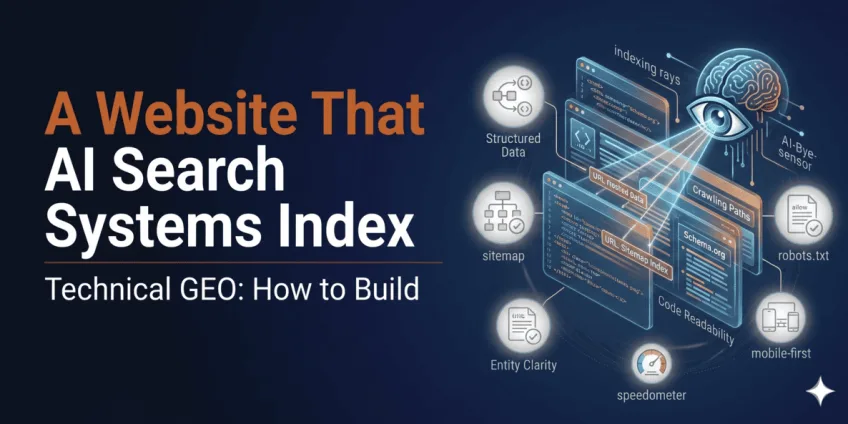
Technical GEO: How to Build a Website That AI Search Systems Can Actually Index
Your React SPA sends AI crawlers a blank page - making all GEO content investment invisible. Here's the full technical implementation for CTOs.
Read article